Seasonal
Winter tires vs. all-season tires in the Portland area
The DuFresne's Team · 3 min read
Think about the roads you actually drive
Portland drivers can face standing water one day and freezing conditions the next. A commute near home is different from regular trips into higher elevations. Choosing tires starts with your usual route, when you need to travel, and whether you can stay home when conditions deteriorate. No tire makes every winter trip safe.
DuFresne's can help you think through those tradeoffs without assuming everyone needs the same setup. Tell the shop about mountain travel, early morning driving, steep neighborhood streets, and your available storage space. Those practical details matter more than choosing a tire based only on an appealing label.
What all-season tires can and cannot do
All-season tires are designed to balance performance across a range of conditions. A suitable set in good condition can make sense for many drivers who mainly encounter rain and moderate weather. Their winter capability varies, however, and the all-season label is not a promise of dependable grip on ice or deep snow.
Some all-weather tires carry the three-peak mountain snowflake symbol, indicating they meet a specified snow-traction performance requirement. That symbol is useful, but it does not mean a tire performs identically to a dedicated winter tire on every surface. Look at the exact model, its intended use, and independent testing where available, rather than relying on broad categories alone.
Let's take a look at your car.
Book OnlineWhere dedicated winter tires help
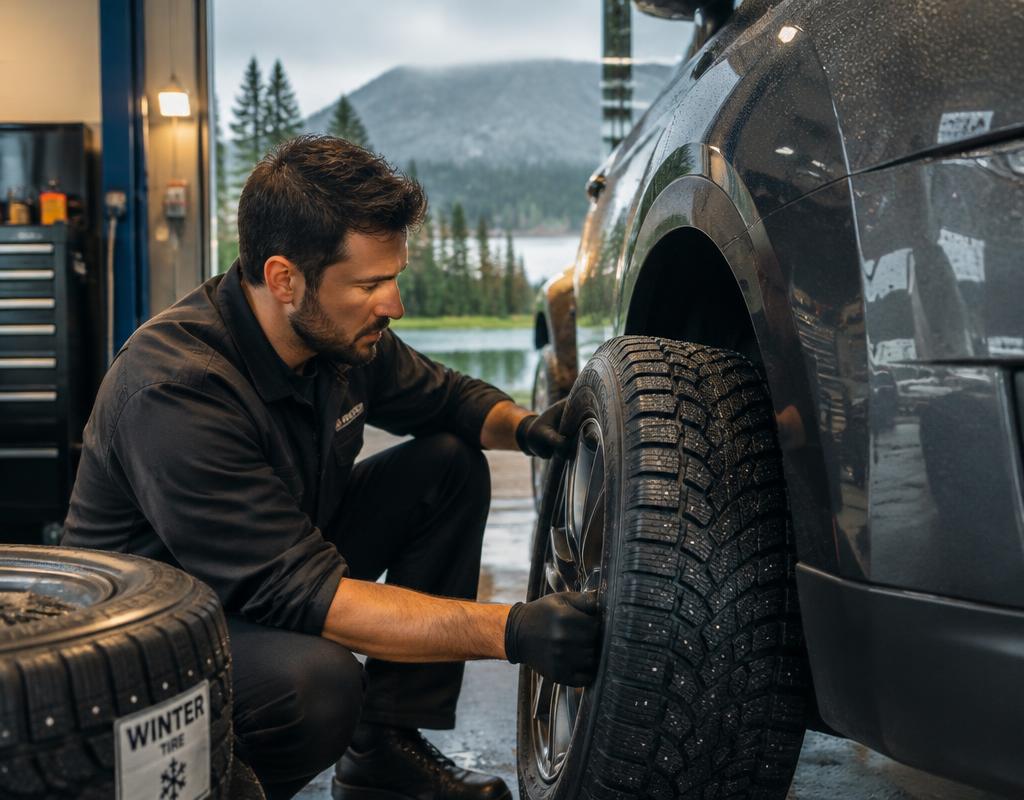
Dedicated winter tires use tread designs and rubber compounds intended for cold conditions. They can improve traction in snow and on cold surfaces compared with many conventional all-season tires. On ice, stopping distances can still be substantial. Lower speeds, additional following distance, and avoiding unnecessary travel remain important even with appropriate tires.
Winter tires are generally installed as a matched set of four to preserve balanced handling. Mixing tire types or fitting winter tires only to the driven wheels can create unpredictable behavior. Follow your vehicle manufacturer’s requirements for size, load rating, and permitted combinations. All-wheel drive helps a vehicle get moving, but it does not eliminate the limits of braking or cornering grip.
Condition matters as much as category
Check inflation when the tires are cold using the pressure listed on the vehicle placard, not the maximum pressure molded into the tire sidewall. Falling temperatures can reduce pressure. A tire pressure warning deserves a check for both inflation and possible leakage, not simply a reset of the warning light.
Tread depth, uneven wear, cracking, bulges, and damage all deserve attention. Legal minimum tread depth is not a guarantee of good wet-weather performance. If the car pulls or the tires wear unevenly, ask whether alignment or suspension concerns need investigation. Rotation schedules and replacement decisions should account for your vehicle’s requirements and the condition of all four tires.
Plan before the weather changes
Check current Oregon road conditions and traction requirements before traveling. Carry any required traction devices, and verify that your vehicle and tire combination can use them. Some vehicles have limited clearance or specific restrictions. Practice installation somewhere safe before you need to do it beside a cold road.
Whether you need a tire condition check or help deciding how to prepare for winter driving around Portland, start before the forecast becomes urgent. Talk with DuFresne's about your vehicle and your routes. To arrange a visit, Book Online.